
What Is Direct Mail? The Definitive Guide to Mail Marketing
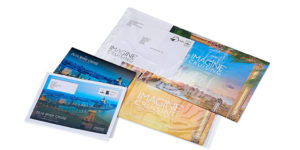
Direct mail is a marketing strategy that involves sending a piece of physical promotional material – flyers, brochures, letters, newsletters, postcards, catalogues, packages or coupon envelopes – through postal or courier services to targeted businesses or homes. Because it arrives without an invitation, some recipients call it “junk mail”, yet done well it remains one of the highest-returning marketing channels available. This definitive guide covers how direct mail works, whether it still delivers, how to build your mailing list, the pros and cons, postage brackets, seven ways to use it, and how to send it. Get a direct mail quote here >
Does Direct Mail Marketing Still Work?
Many people assume paid search and other digital channels have reduced direct mail’s effectiveness – but direct mail returns a higher ROI than marketing channels like paid ads and display ads, and is considered one of the highest-ROI channels available, second only to social media. Survey data on ad response makes the gap plain: direct mail achieves a response rate above 5.3%, while email marketing delivers only around 0.6% for advertisers. Direct mail still works very effectively as a marketing medium for any business – and blanket leaflet distribution works the same way for large-scale marketing.
Building the Mailing List for Your Direct Mail Campaign
The mailing list is the very first task when setting up a campaign, because direct mail only delivers its high response rate when the right message lands on the doorstep of the right people. Other marketing mediums broadcast to everyone and hope; direct mail connects specifically with those who need the service, promoted directly at their door – which is why it outperforms channels like PPC and display advertising.
How Should You Define Your Target Market?
Selecting the right customers is one of the most challenging parts of direct mail marketing, and your response rate depends on it. Consider these parameters before your mail is ready to deliver:
- Age
- Gender
- Approximate monthly or yearly income
- Homeowner or not
- Car owner or not
- Educational level
- Children at home
- Employed or not The more information you collect, the more responses you’ll get – and you can add parameters specific to your offer, such as pet ownership, shareholding, hardwood floors or asthma, depending on the service your campaign promotes. Cleansing and preparing this data professionally is where direct mail data processing earns its keep.
Direct Mail Marketing: Pros and Cons
| Pros | Cons |
|---|---|
| High chance of a positive customer response | Some recipients treat uninvited mail as “junk” and don’t read it |
| Results can be tracked and analysed | Money is wasted on pieces that go unopened or fail to catch attention |
| Cheaper than many other marketing media | Response rates can be lower than some other direct marketing actions |
| Flexible to execute and target | |
| A highly individualised way of marketing |
Postage Brackets: Advertising Mail vs Business Mail
| Bracket | What Falls In It | Cost |
|---|---|---|
| Advertising mail | Promoting a sale, or a charity asking for donations, contributions or support for a cause | Cheaper |
| Business mail | Location-move notices, bills, invoices and general customer service updates | More expensive |
If the brackets seem confusing, don’t panic – when you send your artwork by PDF, we can determine which bracket your mail falls into. Email sales@thedirectmailcompany.co.uk today and we’ll come back to you within minutes.
How to Run Direct Mail for a Home Business
- Set your goal – Build your filtered mailing list, then specify why you’re running the campaign and what your customer wants from it. Cover everything from the customer’s perspective and organise it well inside the mail.
- Choose your mail type – Most home businesses prefer postcards: less expensive, and more likely to be read than a letter the recipient must open – though space for information is limited.
- Design the mailing – Success depends on a captivating mailer, which means understanding copywriting: an alluring presentation that speaks to the recipient’s needs and offers direct solutions to their problems. If you use an envelope, put an enticing message on the envelope itself – it can bring a massive lift in response.
- Identify your exact recipients – Decide between cold mail from a purchased list or contact with past customers. If buying a ready list, research it thoroughly – quality, updated lists are what produce impressive responses – and follow the list owner’s usage rules. Once recipients respond, you can move them onto your own regular mailing list.
- Use bulk mail – Bulk mailing is the cheapest way to send direct mail. Just never include misleading or incomplete information that could undermine customers’ trust.
- Run a test campaign first – Mailing your entire list is expensive, so test on a smaller segment, monitor whether it succeeds, and only then broaden the send.
- Track and analyse the response – Once the campaign has run, measure the results, calculate the ROI, and act on what the numbers tell you for the next campaign.
7 Ways to Use Direct Mail
- Promote your product catalogue and services – Showing examples of your products gives customers an overview of your offer, and adding coupon codes or discounts encourages them to buy.
- Add special discounts – Rather than a plain letter or postcard, include a special deal: a percentage off, or coupon codes for first-time customers – a great way to draw your recipients’ attention.
- Send reminders – Keep customers aware of what’s coming. A tax consultancy, for example, can send a December reminder to take deductions before year-end, or a notice ahead of the tax deadline.
- Include valuable tips or items – Many estate agents send calendars and recipe guides. Useful items stay in the home, and your business name is seen every time they’re used – just make sure what you send is genuinely useful to the recipient.
- Send samples – People love free products and love testing them. Keep the sample affordable within your campaign budget, and it can convert a “junk mail” recipient into a customer.
- Post newsletters – Email newsletters are cheap, but a printed, mailed newsletter is compelling: it combines discounts, services, valuable tips and announcements in one keepable piece.
- Make announcements – Launching a new product or service? Let all your existing clients, prospects and customers know by post.
The Benefits of Direct Mail Marketing
- Highly targeted – Direct mail reaches the exact audience with intent to buy. A health store, for instance, can mail a list of people who regularly purchase vitamins and supplements.
- Highly measurable – Even a small company can easily measure ROI across one or multiple campaigns, using coupons and discounts to track conversions and monitor response.
- Individualised – Mail-merge software addresses each consumer by name, so the mailing reads like the owner speaking to them face to face – and being addressed by name opens the door to a longer relationship.
- Extremely flexible – Direct mail takes less effort and cost than its reputation suggests: attach a free product, fill the envelope with as much information as the campaign needs, and vary everything by customer intent.
Standalone Mail vs Shared Mail: How Will You Send It?
| Method | How It Works | Cost |
|---|---|---|
| Standalone mail | Your business pays for everything and the mailing carries only your advertising, giving maximum control over format and presentation | More expensive |
| Shared mail | Also called “marriage mail” – advertisers share space in one mailing and split the costs across a predefined list. Examples include RedPlum, Clipper Magazine and Valpak | As low as a few pence per household |
Standalone mail offers far more possibilities to format and present your message creatively, within your budget; shared mail trades exclusivity for dramatically lower cost per household.
Final Thoughts on Direct Mail
Every business owner is trying to create a positive impact on their market, and that takes quality customers who’ll champion the brand. Done correctly, a direct mail campaign is highly efficient and beneficial – it may carry a “spammy” reputation with some, but it remains more than worth its value in building a brand and leading it to success. At The Direct Mail Company, we offer 5-star customer service throughout your campaign: email sales@thedirectmailcompany.co.uk or call 0333 038 3797 for any help you require.
What Is Direct Mail: Frequently Asked Questions
What is direct mail in simple terms?
Direct mail is physical promotional material – letters, postcards, flyers, brochures, catalogues – posted to targeted homes or businesses to prompt a response.
What response rate does direct mail get?
Above 5.3%, compared with around 0.6% for email marketing – roughly nine times higher.
What is the difference between advertising mail and business mail?
Advertising mail promotes a sale or charitable cause and posts at a cheaper rate; business mail covers operational messages like invoices, bills and service updates, and costs more.
What is shared mail?
Also called marriage mail: multiple advertisers share one mailing and split the postage, cutting the cost to as little as a few pence per household, at the price of sharing attention.
Should I test before mailing my whole list?
Yes – mail a smaller segment first, measure the response, and only roll out to the full list once the test proves the campaign converts.
Who can run my direct mail campaign end to end?
The Direct Mail Company handles data, print, enclosing, postage brackets and delivery. Email sales@thedirectmailcompany.co.uk or call 0333 038 3797, or get a direct mail quote here >